Be yourself; Everyone else is already taken.
— Oscar Wilde.
This is the first post on my new blog. I’m just getting this new blog going, so stay tuned for more. Subscribe below to get notified when I post new updates.
Be yourself; Everyone else is already taken.
— Oscar Wilde.
This is the first post on my new blog. I’m just getting this new blog going, so stay tuned for more. Subscribe below to get notified when I post new updates.
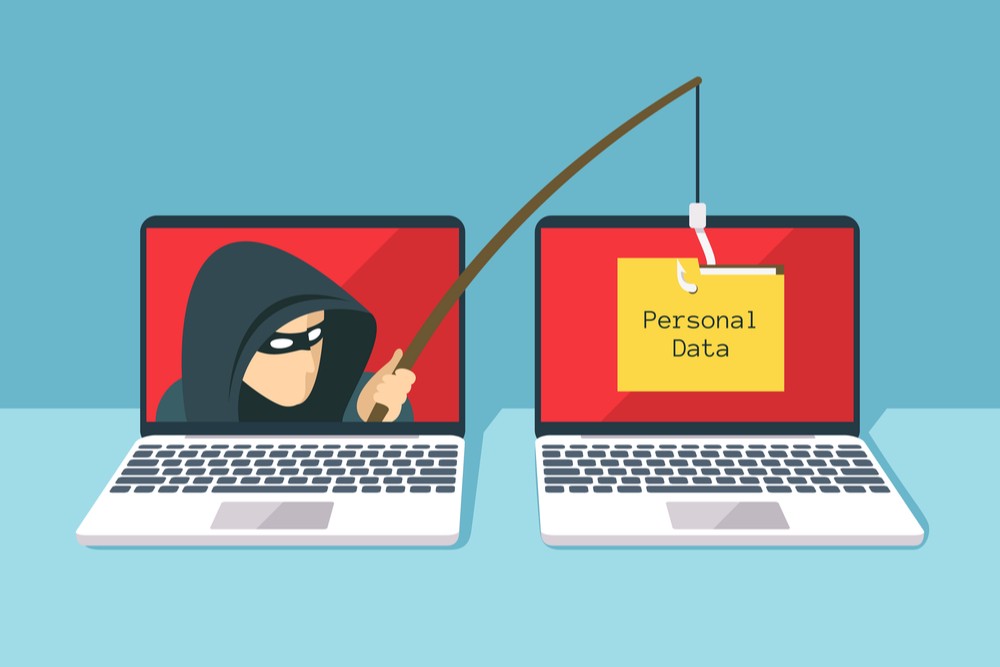
Since our childhood, we have been told not to talk to strangers. Why? Some strangers might use the information in the conversations to do something harmful. We should not share our personal information with others. However, phishing attack is a “high-tech” form of talking to strangers. Scammers usually use emails, text messages or even social media to trick the victim giving his or her personal information.
The personal information here can be credit card number, bank account information, passwords etc. The first phishing attack happened sometime around 1994. A hacker named “Da Chronic” developed a windows application, which could automatically send direct messages requesting account number and passwords American Online users. Phishing attacks happen when someone pretends to be someone else requesting information.
Phishing attack is not only harmful to people, but also harmful to companies. Even the internet giants like Google and Facebook got duped out of $100 million through an email phishing scheme (Yakowicz, 2018). Most of the phishing attacks are sent through emails. The scammers may send people links and ask the victims to enter their personal information. The reason phishing attacks mostly happen through emails is that everyone uses emails.
With a rapid development of technology, cyber security professionals, who are the first line against phishing attack, also improve their skills as well. People also aware of protecting their personal information. However, the scammers also get evolutions of phishing attacks. The scammers develop clone phishing and clone websites. The hackers hack into a real website and change the link to redirect people to their clone websites. This kind of clone websites can not last very long time, but they are difficult for people to tell if they are real or not.
There are some ways through which people could protect themselves from phishing attacks.
The first two methods keep the software in the recent version to avoid phishing attacks the most. The third and the fourth ones could keep the passwords strong. Passwords such as “password123”, “Iloveu”, etc. are too easy to guess. Backing up data make the data safe in case the device is hacked. Other than these methods, being aware of phishing attack is important.
NEVER give information to someone requesting it.
Gershwin, A. (2019, May 30). The evolution of phishing attacks: why are they still effective? Retrieved from https://hackernoon.com/the-evolution-of-phishing-attacks-why-are-they-still-effective-44bdb8f458c2
Federal Trade Commission Consumer Information (2019, May 19). How to Recognize and Avoid Phishing Scams. Retrieved from https://www.consumer.ftc.gov/articles/how-recognize-and-avoid-phishing-scams
Yakowicz, W. (2018, July 6). The 3 Biggest Phishing Scams of 2018. Retrieved from https://www.inc.com/will-yakowicz/biggest-email-phishing-scams-2018.html
This is an example post, originally published as part of Blogging University. Enroll in one of our ten programs, and start your blog right.
You’re going to publish a post today. Don’t worry about how your blog looks. Don’t worry if you haven’t given it a name yet, or you’re feeling overwhelmed. Just click the “New Post” button, and tell us why you’re here.
Why do this?
The post can be short or long, a personal intro to your life or a bloggy mission statement, a manifesto for the future or a simple outline of your the types of things you hope to publish.
To help you get started, here are a few questions:
You’re not locked into any of this; one of the wonderful things about blogs is how they constantly evolve as we learn, grow, and interact with one another — but it’s good to know where and why you started, and articulating your goals may just give you a few other post ideas.
Can’t think how to get started? Just write the first thing that pops into your head. Anne Lamott, author of a book on writing we love, says that you need to give yourself permission to write a “crappy first draft”. Anne makes a great point — just start writing, and worry about editing it later.
When you’re ready to publish, give your post three to five tags that describe your blog’s focus — writing, photography, fiction, parenting, food, cars, movies, sports, whatever. These tags will help others who care about your topics find you in the Reader. Make sure one of the tags is “zerotohero,” so other new bloggers can find you, too.

 Aichen Cui's MIS304 site